
A garage cleanout plan that keeps decisions moving
Sort by destination, not by vague “maybe” piles. Keep one clear walking lane, pull out hazardous products early, and photograph the final removal load before requesting a quote.
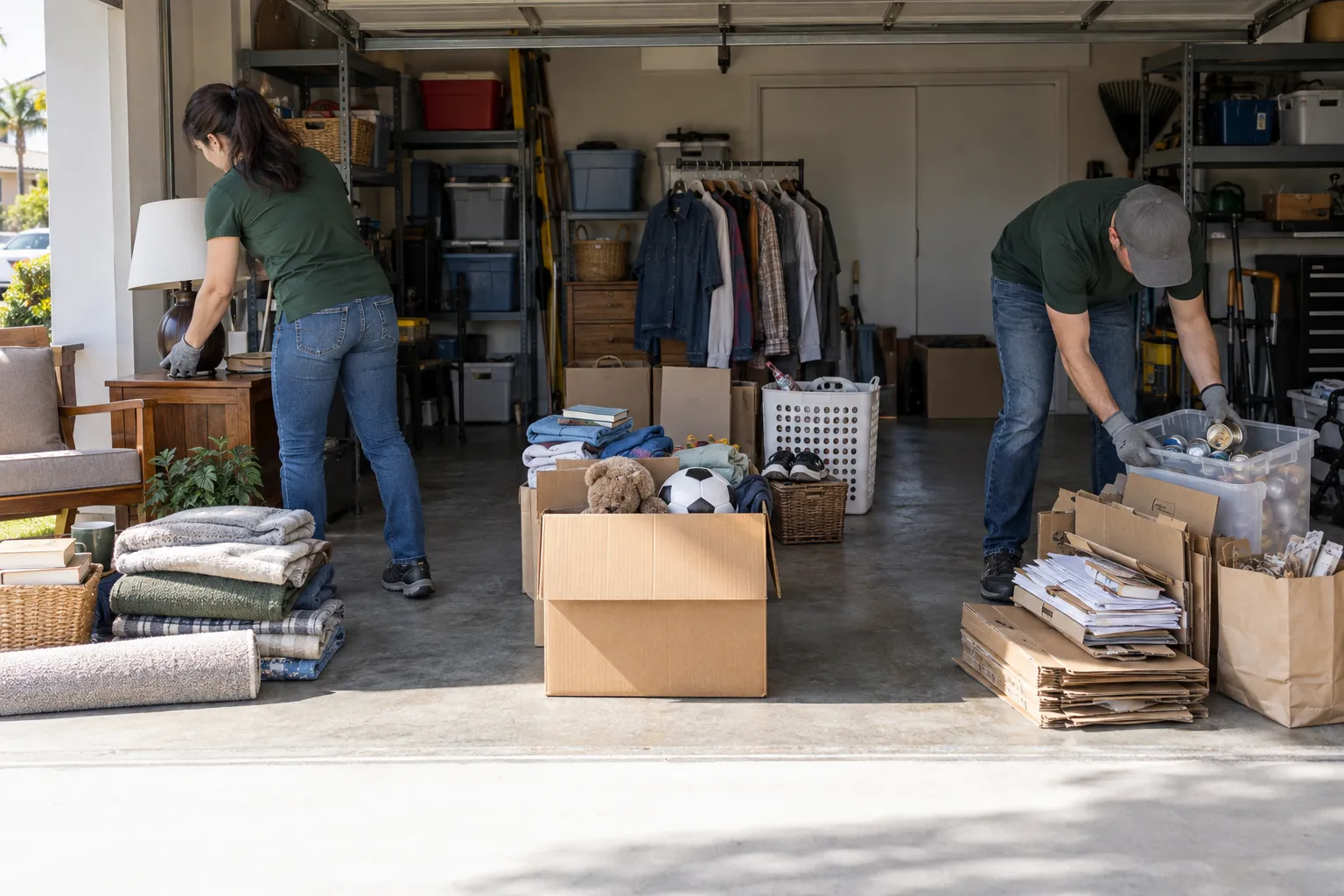
A garage cleanout slows down when every object becomes a separate debate. Use five destinations from the start: keep, sell or give away, recycle, special waste, and remove. The destination tells you what happens next.
Set the safety boundary first
Open the garage for light and ventilation, but keep the work area controlled. Create a clear lane from the back wall to the driveway. Do not stack heavy items above shoulder height or block the electrical panel, water heater, doors, or vehicle path.
Before moving ordinary boxes, identify paint, solvents, pesticides, pool chemicals, motor oil, batteries, fluorescent lamps, propane cylinders, and electronics. California requires special handling for many of these materials. Move them only as their labels direct and keep incompatible products separate.
Use five destination zones
| Zone | What belongs there | Finish condition |
|---|---|---|
| Keep | Tools, seasonal items, records, and equipment you use | Shelved, labeled, and reachable |
| Sell or give away | Usable items you will actively list or offer | A recipient or deadline is assigned |
| Recycle | Clean cardboard, accepted metal, and other verified recyclables | Prepared to local rules |
| Special waste | Hazardous products, batteries, lamps, electronics, and similar items | Separated for an authorized facility |
| Remove | Approved ordinary junk and non-hazardous household material | Counted and ready for a hauling quote |
Work one small area at a time
Start with one shelf, wall, or floor section. Finish its decisions before opening the next group of boxes. This keeps the walking lane open and makes progress visible. If an item needs research, place it in a small review box with a fixed decision date rather than building a second garage-sized “maybe” pile.
Use a decision rule for duplicates
- Keep the safest, complete, working example.
- Keep the quantity you can store where it is actually used.
- Do not keep a broken duplicate solely because another one might fail.
- Set a real deadline for anything you plan to sell.
- Confirm donation acceptance before loading your vehicle.
Prepare the final hauling list
Count furniture and large equipment individually. Estimate boxes and bags by number and size. Note loose shelving, lumber, yard material, tires, construction debris, or dense items separately. Photograph the full removal zone from two angles and record the path to the driveway.
Garage cleanout checklist
- One clear walking lane remains open.
- Personal records, keys, medications, and valuables are secured.
- Special waste and electronics are outside the general load.
- Items to keep are physically separated from items to remove.
- Large and unusually heavy items are listed.
- Photos show the full volume and access path.
- A decision-maker can review the on-site quote.
The City of Redlands explains that local waste reduction includes reuse, recycling, and correct handling across different material streams. A cleanout does not need to send everything to the same destination. Once the ordinary removal zone is final, call 909-365-5950 for a scope check.
Sources
- City of Redlands, Waste Reduction. Redlands waste-system overview; retrieved September 18, 2026.
- CalRecycle, Waste Banned from the Trash. California statewide guidance; retrieved September 18, 2026.