
Prepare an appliance for removal without creating a hazard
Empty the appliance, confirm its utility connections, measure the route, and leave sealed systems intact. Qualified help should handle gas, hardwired electrical, plumbing, and refrigerant work.
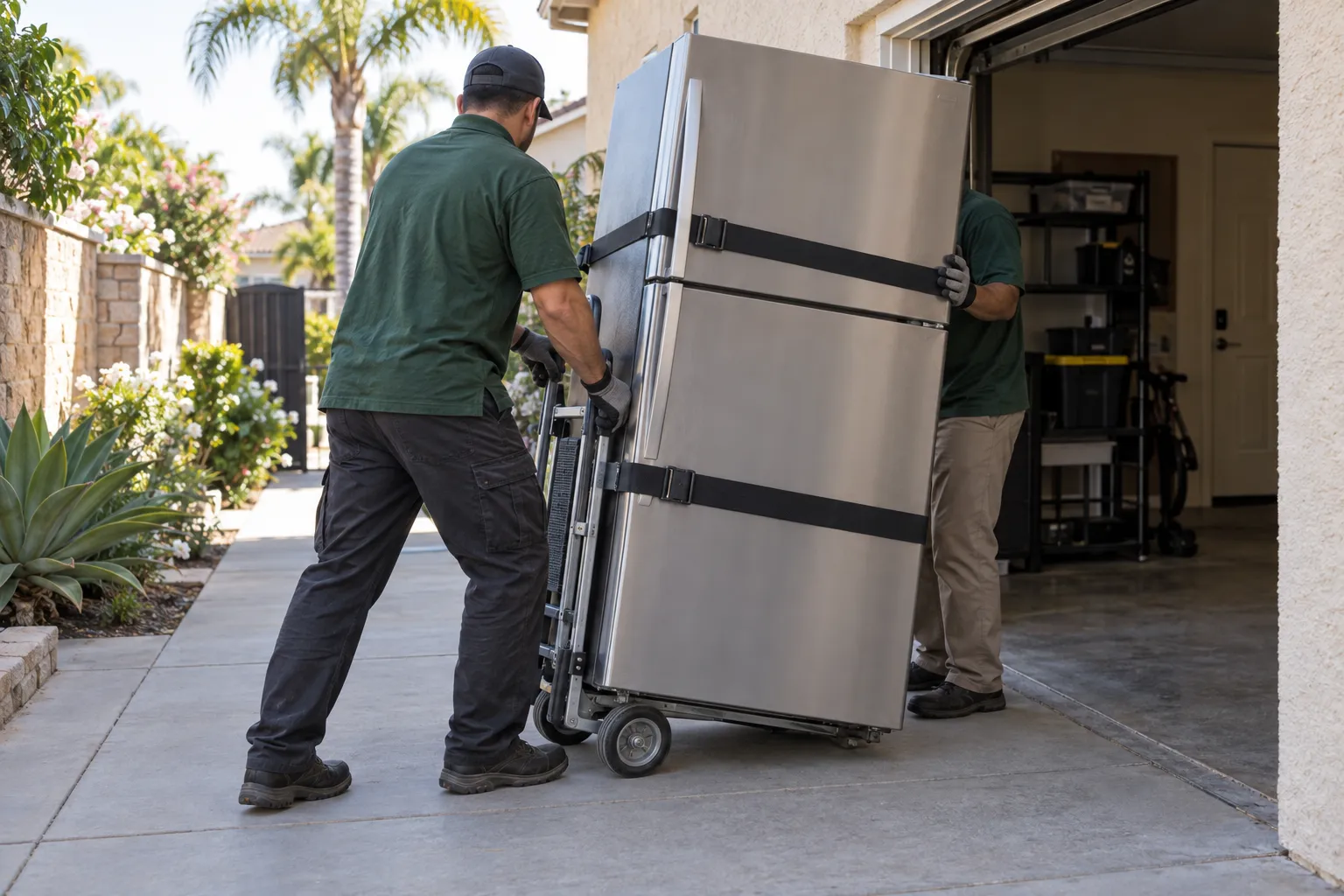
Appliance removal goes smoothly when the crew knows the exact machine, its location, and whether it is already disconnected. A refrigerator in a garage is a different handling job from a washer in an upstairs laundry closet.
Identify the appliance and connection type
Share the appliance type, approximate size, and location. State whether it uses a standard plug, a hardwired connection, water supply, drain, gas line, or vent. Do not assume the hauling crew disconnects utilities as part of ordinary removal.
| Appliance | Preparation questions | Do not improvise |
|---|---|---|
| Refrigerator or freezer | Is it empty, defrosted, dry, and accessible? | Do not cut tubing or disturb the sealed refrigerant system. |
| Washing machine | Are water valves closed and hoses safely disconnected? | Do not force a corroded valve or create a leak. |
| Electric dryer | Is it unplugged and is the vent detached? | Do not work on a hardwired circuit without qualified help. |
| Gas dryer or range | Has a qualified person shut off and disconnect the gas? | Do not loosen a gas fitting yourself. |
| Dishwasher or built-in unit | Has it been safely disconnected and removed from cabinetry? | Do not assume demolition or trade work is included. |
Keep refrigerant systems intact
Refrigerators, freezers, air conditioners, dehumidifiers, and some other appliances may contain refrigerants or compressor oil. The U.S. Environmental Protection Agency says refrigerant must be recovered before final disposal, and that recovery must meet federal requirements. A homeowner should not puncture lines or dismantle the sealed system to make an appliance lighter.
Measure the removal route
Measure the appliance at its widest and tallest points, then compare those dimensions with doors, hallway turns, gates, and elevator openings. Photograph tight turns. Remove loose shelves or drawers only when the manufacturer allows it and you can do so safely. Secure doors for transport without damaging the appliance or creating an entrapment risk during storage.
Prepare the surrounding area
- Remove food, dishes, laundry, and loose objects.
- Allow a freezer to defrost and dry so water does not spill along the route.
- Clear rugs, shoes, hoses, and other tripping hazards.
- Protect pets and children from the work area.
- Tell the team about steps, uneven surfaces, and narrow landings.
Questions for the removal provider
- Does the appliance need to be disconnected before arrival?
- Can the crew handle this appliance from its current location?
- Does its weight or refrigerant-containing design affect the quote?
- Will it be routed to an appropriate recycling or disposal facility?
- Are built-in removal, doors-off handling, or extra labor outside the standard scope?
Call 909-365-5950 with the appliance type and access notes. If utility work is still needed, arrange qualified help before the hauling appointment.
Sources
- U.S. Environmental Protection Agency, Appliance Disposal. Federal guidance; retrieved September 18, 2026.
- CalRecycle, Waste Banned from the Trash. California statewide guidance; retrieved September 18, 2026.